pexels-val-gerbaud-736226052-18464461

How Ethical Fashion Can Fight Outward Migration & Poverty

In many rural regions, young people migrate to cities in search of income opportunities, leaving behind their homes, culture, and families. Ethical fashion can reverse that trend—by creating dignified, meaningful livelihoods in place.

Take, for example, a weaving village in Sulawesi. Before partnering with an ethical brand, many women had limited income and saw weaving as a mere side job; younger generations left for cities to find work in factories. When a brand committed to fair wages, consistent orders, capacity building, and local market access stepped in, the community’s economic prospects shifted. Families regained stable income, children stayed in school, and the incentive to leave was reduced.

In East Nusa Tenggara, some textile cooperatives have integrated weaving with ecotourism. Tourists visit weaving centers, buy products on site, and pay small workshop fees. This creates additional revenue streams and helps keep the craft alive locally. The result: younger artisans stay in their villages, carrying forward traditions rather than abandoning them.

Ethical fashion also brings transparency, so consumers know their purchase supports local economies—not exploitative factories. Brands that share the stories of weavers, pay for education or health support, or reinvest profits into infrastructure (roads, water, tools) help make communities more resilient.

At TORAJAMELO, our mission echoes this approach. By weaving heritage with purpose, we build economic enablement where migration is not the only option. When we commit to long-term partnerships, fair pricing, and capacity building in remote regions, we’re creating a force stronger than just fashion—we’re anchoring hope at home.

pexels-heyhicham-31854096

Life Cycle of a Hand-woven Textile

At TORAJAMELO, every piece we create carries the story of many hands, many seasons, and generations of knowledge. A hand-woven textile is not just fabric—it is a journey. From the planting of a cotton seed to the final garment worn with pride, each stage reflects patience, resilience, and care for both people and planet.

1. The Seed and the Soil
It begins with the land. Cotton seeds are planted by local farmers, nurtured in the rhythm of sun and rain. Unlike industrial plantations, these fields are small and cared for by hand. The connection to nature ensures that the fibre carries the energy of the earth from the very beginning.

2. Harvesting and Spinning
When the bolls are ready, they are harvested with care. The raw cotton is cleaned, fluffed, and spun into thread using simple tools—sometimes a spindle, sometimes a wheel. This process transforms clouds of fibre into long, strong threads ready for weaving.

3. Coloring with Nature
The threads are then dyed with natural pigments: indigo leaves, roots, bark, and local plants. Each dye bath is a recipe passed down through generations. The colours are not just beautiful; they hold meaning. Indigo may symbolize protection, while red can signify life or celebration.

4. Weaving Stories on the Loom
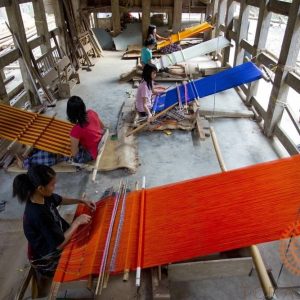
On the backstrap or traditional loom, women artisans weave the dyed threads into patterns. Every motif is a language—representing community, ancestry, and identity. This stage can take weeks or even months, as each thread is placed with precision and care.

5. From Textile to Garment
Finally, the woven cloth is shaped into garments. Modern tailoring blends with ancient craft, giving life to pieces that are both timeless and wearable. The result is more than fashion—it is heritage you can hold.

Each hand-woven textile carries a full life cycle of earth, hands, and stories. When you wear one, you become part of that journey.

pexels-enginakyurt-1482177

Challenges in Making Supply Chains Transparent and Traceable

In the fashion world, the call for transparency has never been louder. Customers want to know where their clothes come from, who made them, and under what conditions. For artisanal brands like Torajamelo, committed to empowering women and preserving culture, this demand aligns with our values—but putting it into practice is not always easy.

One major challenge is fragmentation. Our supply chain begins in remote villages, where women weavers work with traditional looms and natural dyes. Each community has its own rhythm and methods, making it difficult to capture standardized data across every stage. Unlike mass production factories, these processes are often informal, rooted in oral tradition rather than written records.

Another hurdle is technology access. Many artisans live in areas with limited internet or mobile coverage. Asking them to log production steps into a digital system is not realistic. Instead, we rely on face-to-face communication, field visits, and trust—a system rich in human connection but challenging to scale or formalize.

Cost is also a significant barrier. Building traceable systems requires investment in tools, training, and monitoring. For small brands, the resources to create blockchain databases or end-to-end tracking platforms are limited. Balancing financial sustainability with deep transparency is a constant negotiation.

Despite these obstacles, we believe traceability matters. It ensures dignity for artisans, builds trust with customers, and sets a higher standard for the fashion industry. At Torajamelo, we are taking steps—documenting weaving stories, introducing garment passports, and piloting small-scale tracking projects—while keeping our commitment to authenticity and respect for local realities.

True transparency is not about perfection; it is about progress. One thread at a time, we are weaving a supply chain that honors both people and planet.

PB020027

Life After Leprosy in Toraja

Two days ago I received an invitation to attend the commemoration of the World Leprosy Day 2011 with the theme “No Leprosy Among Us”. This brings my mind to Grandpa Marcia, who lives in the Leprosarium Batulelleng in Rantepao, North Toraja. (In Toraja, if you have a grandchild, you will be called with the name of your oldest grandchild. Thus, Marcia is Grandpa Marcia’s oldest grandchild).

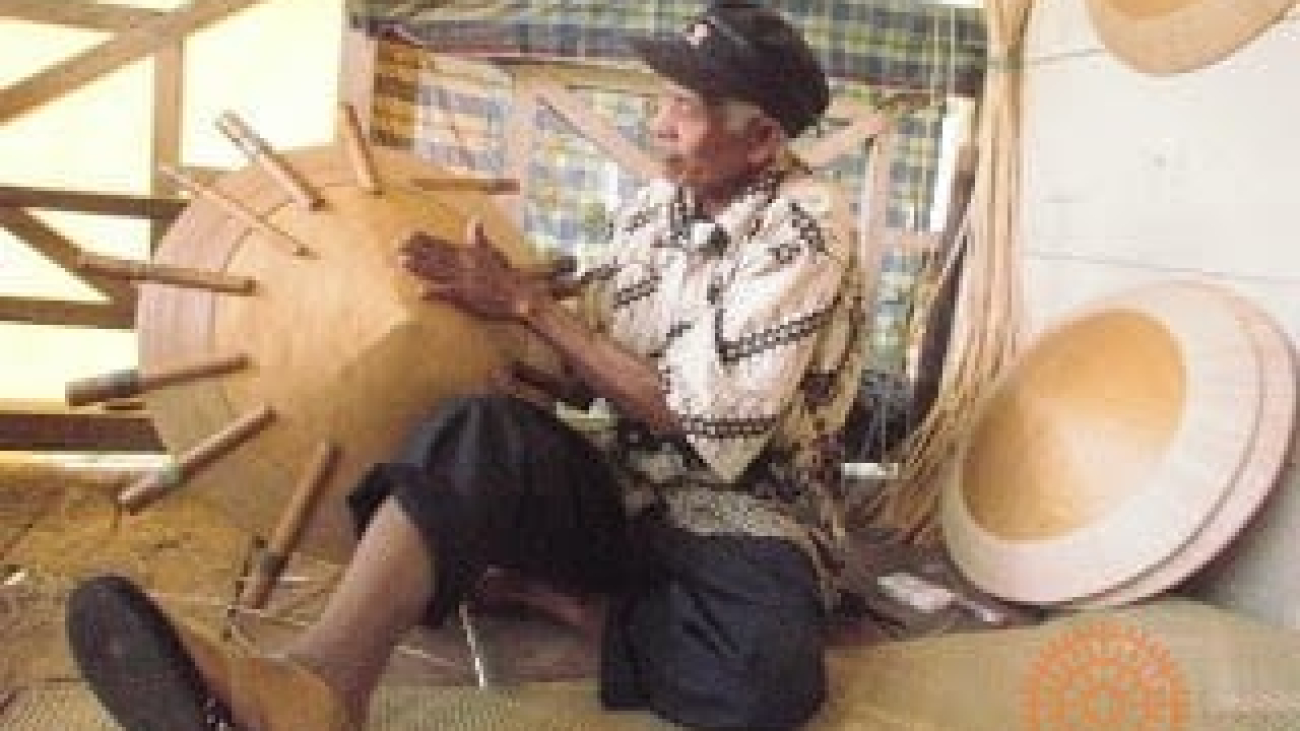
I met Grandpa Marcia at Pasar Bolu, the main market of Rantepao, which happens every six days. I was looking for a traditional bamboo hat to be worn to funeral ceremonies. As usual, when I go shopping I always look for a seller who smiles. I will pay a higher price, even without bargaining to a smiling seller. Among all the hat sellers, Grandpa Marcia’s wide smile drew me to him. From then on, I often go to his little, but clean wooden hut in the Leprosarium.

Grandpa Marcia is a Master hat maker. He has taught his daughters and neighbors how to make top quality hats.They share the work in making each hat. Grandpa Marcia does the most difficult part, which is the bamboo center top and the top cone. It takes them up to four weeks to make a hat, which includes the time to dry the bamboo strips in the sun.

Grandpa Marcia goes to Pasar Bolu every six days to bring his hats and those of his neighbors. Many of his neighbors do not dare to leave the Leprosarium, because they have lost their fingers and toes. Grandpa Marcia has also lost his right leg. However, he now wears a false leg. And once he wears long pants and shoes, he looks like any ordinary people. That’s why he does not have any problem about going to the market.

The World Leprosy Day was created and announced for the first time on 31 January 1954 by Raoul Follereau. He is a journalist and a fighter who believes, “that people affected by leprosy could be cared for like all others who are ill and so that those in good health could be cured of their absurd and often criminal fear of this disease and those who are affected by it”. 2011 is an important milestone in eradicating leprosy with the start of WHO (World Health Organization) program of “Enhanced Global Strategy for Further Reducing the Disease Burden Due to Leprosy 2011-2015”.

In Jakarta, the World Leprosy Day will be commemorated on 31 January, 2011 with three goals: to build confidence and independence for the survivors of leprosy, to eradicate stigmatization on leprosy sufferers and survivors and to empower the leprosy survivors to build their own future, their family and community. These goals are important, especially with the fact that according to the Indonesian Minister of Health in 2010, that there are still around 14 provinces and regencies in Indonesia which still have leprosy. Additionally, Indonesia together with India and Brazil are the top three countries, which still have new Leprosy sufferers.

It is clear then, that Grandpa Marcia is one of leprosy survivors who has managed to empower himself socially and economically while supporting his family and helping his community. At the same time, with his traditional hats, he maintains the continuation of Toraja culture.

You can also check on this link to read more.

12771771_951526981551404_8161120667704967497_o-1

TORAJAMELO, How Torajan Handwoven Textile Could Pull Out Women and Society from Cycle of Poverty

Every time the discussion about developing countries emerges, there’s always a recurring theme of exploitation of indigenous people. Not only in developing countries, sometimes even in powerful and leading countries, these indigenous communities still suffer from a potential threat to their cultures and livelihoods.

Traveling to the rural areas of Sulawesi, one of Indonesia’s archipelagos, we will be welcomed by centuries worth of tradition, preserved by thecommunity in Toraja.

Courtesy of Torajamelo.com

Dinny Jusuf, was moved by the fact that the poverty rate in the population of 254 million people in Indonesia is an astounding 13.8%, with 70% among them are women (BPS, 2015).

She sees that across Indonesia, many women’s only skill is back-strap weaving, but their creativity is limited by prices and low demands, and not to mention the culture appropriation by big fashion names that discredit the works of these artisans. It forces these women to find works in other countries, only to be abused by their employers, and some even came back with unwanted pregnancy. So she came up with TORAJAMELO.

TORAJAMELO (CBN – ID000009955), literally means Beautiful Toraja, was then set up to create a better life for the marginalized rural women weaver artisans in Indonesia and to rejuvenate the art and culture of Indonesian hand-woven cloth. She started the work in Toraja, South Sulawesi, Indonesia in 2008. What the company has done so far is preparing the weavers for the global market by conducting Community Organizing programs and Capacity Building (i.e. fashion trend, textile design, etc.) and giving access to micro-finance and social support (i.e.reading glasses donation, etc.). Not only that, the company also has a regeneration program to pass on weaving knowledge to the young people.

OLYMPUS DIGITAL CAMERA
Courtesy of Torajamelo.com

Through their products, TORAJAMELO creates fun & functional head-to-toe fashion lines and gift products of high quality, all made of Indonesian hand-woven textile from their indigenous geographical origin.

“By 2025, we aim to become the shopping destination of Indonesia, which sells high-quality fashion line and gift products, all made of Indonesian hand-woven textile from their geographical origin, in collaboration with at least 5,000 weavers across rural Indonesia and at least 100 urban poor women who produce the finished items,” explains Dinny.

Courtesy of Torajamelo.com

Basing the business on community, quality and compassion, TORAJAMELO seeks to make a real change by respecting artisans and value them with the fair market prices for the weavers’ better lives. The company works as both foundation and a limited liability. With a total of 1,000 weavers based in Sulawesi and East Flores, TORAJAMELO now ventures their business to e-commerce and brick and mortar shop in expatriate area of South Jakarta.

      
Courtesy of Torajamelo.com      Courtesy of Torajamelo.com

Dinny’s background as a former Secretary General of Komnas Perempuan (National Commission on Anti Violence Against Women) surely plays part in her continuous advocacy for indigenous women weavers. Now as the CEO, she works alongside Nina Jusuf as the Head of Design and Production with fashion design degree and her expertise in violence against women issues.

“We keep our team small, so we can be agile. We believe in mentoring the young generations. So, all of our seven staffs consist of women who share the dream to create a better life for rural women through weaving,”

Courtesy of Torajamelo.com

In November 2016, TORAJAMELO was chosen by the Staff Office of the President of Republic of Indonesia as one of the home-grown brands to develop Nation Branding for the promotion of Trade, Investment and Tourism for Indonesia.

Courtesy of Torajamelo.com

In May 2016, Dinny Jusuf received “The Marketeers Women Award 2016” by the MarkPlus Inc, a leading company in Southeast Asia on Marketing Strategy, and these awards are just a few of many other inspiring awards that this trailblazer company has won.

TM 4 (1) 1

Catalyst For Change

“Don’t ever give up your dream for anything or for anybody, no matter what.”

— DINNY JUSUF


Dinny Jusuf

BY JESSICA SMULDERS COHEN

When I first met Dinny in my parents’ living room in Jakarta, just around the corner from TORAJAMELO’s shop in Kemang, her open face and smiling eyes were instantly likable. She introduced herself according to her business card: mother, wife, and dreamer. Her two adult children (one a wise man, the other a wild spirit, according to her) and her Torajanese husband are the pillars of her existence. As for dreamer, she admits that people often think she is crazy, because she always does what she feels like and believes in. Once I was back in wintery London, I very much enjoyed following up on those early conversations via Skype calls to Toraja a couple of months later.

TORAJAMELO (beautiful Toraja) was created in response to a cause, rather than as a planned social enterprise, Dinny says. “We didn’t even know what a social enterprise was, and suddenly we were being branded as one.”

She sees the endeavor as simply giving women back their rights — the right to be at home with their children; the right to earn a living to support their family, free from abuse; the right to creativity. The chosen tool for this in Toraja — especially as the lower castes of women in her husband’s village are weavers — is weaving. Dinny also admits she has a soft spot for the craft, and feels it needs more publicity and recognition compared to the already famous Indonesian batik.

Such a philanthropic but pragmatic enterprise did not materialize out of thin air. Dinny brings with her an impressive professional track record: first as a successful banker, then as the mother of two, then as Secretary General of the Indonesian National Commission on Anti-Violence Against Women, when she also cofounded Suara Ibu Peduli (The Voice of Concerned Mothers). In fact, she says she settled in Toraja to finally take a break. Despite that desire for a rest, however, it was not long after she met the local weavers — in 2008 while her husband was building them a house — that TORAJAMELO was born.

Dinny felt a sense of urgency to do something, because she saw elder women dying, and their craft with them, while the younger women were absent working overseas as nannies in Singapore and Malaysia. All of this was highlighted by the fact that many of the babies in the village had Chinese-looking faces. (This tugged on her heartstrings; Dinny has firsthand experience of the stigma that comes along with growing up in Indonesia with Chinese heritage.) The fathers were as absent as the mothers — most likely raising their legitimate children with their wives on the Malay Peninsula, she says. Pregnant Torajanese women would be forced to go home to give birth after being either seduced or abused by their bosses, and would then return to work, leaving their children to be raised by their grandparents in the village.

The Torajanese villagers are predominantly poor farmers, and even though they once had a strong weaving tradition, they no longer had much of a market for it. The number of overseas tourists who visit for the local culture (including textiles, ceremonies, and nature, especially hiking) dropped precipitously after the terrorist attacks in Bali. So Dinny decided to buy up all the cloth they were making and sell it in Jakarta. A couple of years later she appointed her sister Nina (who is also a women’s rights activist but has a training in fashion) as the head designer, and went on to design the garments we see today.

It was this sister dream team who went on to change the lives of not only Torajanese weavers, but countless other women across the archipelago. Dinny has a deep-seated love of Indonesia, Indonesian culture, and especially Indonesia’s traditionally woven cloth. She feels this comes from her mother, who — while pregnant with her, and despite being ethnically Chinese — was completely in love with both Dinny’s Javanese father and the land from whence he came. Notwithstanding this love, her mother eventually immigrated to the United States when the discrimination against her and her children’s ethnicity became too much, bringing five of her six children one by one to join her. Dinny was the only one who decided to remain behind, despite also facing the same prejudices as a Chinese-looking woman in Indonesia that her mother had wanted to escape. She eventually coaxed Nina back for six months a year to help with the operation of TORAJAMELO, which is run from their clothing enterprise in Bandung.

Despite this support from her sister, as well as that of her other siblings and her own family, things have been far from easy. The first battle in Toraja was overcoming the resistance she faced from her husband’s family, and even her husband himself. Being of a higher caste, they were not supportive of her work with the lowly weavers. Finally, the wary prediction of a local wise man also came true: Dinny was deceived by a local weaver who tried to steal her business by faking TORAJAMELO weaver signatures to sell her own proposal for government funding. In this case she was surprised that it was her husband and his family came to her aid, supporting her efforts to resolve the issue. Her latest challenge came when funding was dropped mere weeks from the opening of a momentous exhibition at the textile museum of Jakarta. That time it was her ex-colleagues from Citibank who came to her rescue (personally, not on behalf of the bank). The weavers themselves also pitched in, insisting that a group big enough to do a ceremonial dance had to travel to Jakarta all the way from East Flores to participate, instead of the four representatives that TORAJAMELO could fund. In both cases she found solace in family and friends, and was deeply moved by the purely emotional response to difficulty.

As with the current trend in social entrepreneurship, Dinny has a hard time responding to ideas of modern feminism and global sustainability. She simply does what she feels and knows is right for the weavers and their traditions, instead of looking to name or brand it. For her the greatest impact is seeing Torajanese women return to weave and be with their families. The sustainability aspect comes from women supporting women across generations, and the preservation of cultural identity. When the women are overseas they do not weave — it belongs to the context of their Torajanese house and village, with the support of family and community. “They become whole again,” when they return, explains Dinny. “TORAJAMELO acts as a catalyst for returning their dignity.”

This is both her biggest challenge and most satisfying reward. It was not easy convincing the weavers that they could make better lives for themselves. In many ways they were content to accept their fate. However, now that they see the results of Dinny’s efforts, they are extremely pleased with the improvement.

One of the women who has inspired Dinny the most, a woman she looks up to as a mentor and friend, is a socialist who spent time in jail for her efforts. When Dinny visited her and talked of the strife she faced, her friend would always say, “You may rest, but you cannot ever give up.” This is evident in her work: She has helped more than 48,000 market women set up cooperatives, which are still going strong despite economic difficulties. She lives by the motto that everybody can give a helping hand. “You don’t have to be rich to help others,” she says. “If you have a roof over your head, clothes on your back, and eat three meals a day, you are ready.”

Another favorite piece of advice came from the aforementioned Torajanese wise man: “Dinny, just do it — I give you my blessing. You will be betrayed by your own kind, but don’t give up. I will pray for you. Just keep going.” She laughed at first when he said this, but when his prophecy came true she was shocked at his accuracy!

Young Weavers

Dinny continues to endeavor to keep doing what she believes in, no matter who laughs at her — as her friends often do. Given that people around her, even those in high places, have expressed their envy of her freedom, she has made her own mantra: “Don’t ever give up your dream for anything or for anybody, no matter what.”

“What will you do next?” I ask her. Now that she has reached the 10-year milestone with TORAJAMELO, Dinny has started thinking, especially now that Nina has to spend more time in the United States to do her work. She says she wants to mentor young professional women, whom she believes she can help and inspire, given her breadth of experience as a banker, activist, and women’s rights advocate. She is therefore planning to take TORAJAMELO in the direction of “Thought Leadership”, with the aim of using the original vision to lift marginalized women out of poverty by sharing, inspiring and replicating the work Dinny has done with the weavers. It’s time to pass on the baton. And maybe, finally, get the rest she most certainly deserves.

Dinny Jusuf is the mother-wife-dreamer founder and CEO of TORAJAMELO, and is in charge of Public Relations, Finance and Marketing. Formally established in 2010, TORAJAMELO means “beautiful Toraja”, and is an endeavour to rejuvenate the traditional back-strap loom weaving traditions of Toraja, Sulawesi, Indonesia. Dinny previously worked with Citibank, where she turned around The Training Division from a cost center to a profit making one. Dinny is a women’s activist and was The Secretary General of the Indonesian National Commission on Anti Violence Against Women, and co-founder of women organizations such as Suara Ibu Peduli (The Voice of Concerned Mothers). Follow Instagram @torajamelo and Facebook @torajamelo.

dinny-jusuf-1-resized

Dinny Jusuf, CEO and Founder of TORAJAMELO

An inspiring story of social entrepreneurship.  Whilst many of the leaders we feature focus on the increasing urban issues, it is worth remembering that in ASEAN alone there are more than a quarter of a billion people still living in rural areas.  It is great to see what Dinny Jusuf is doing…

What’s your story?

I am a mother, a wife and a dreamer.  I have two adult children and my husband hails from Toraja, South Sulawesi, Indonesia.  I dream of a better life for marginalized people, especially the women weavers of Indonesia.  In 2008, I started working with weavers from Toraja.  In partnership with Nina, my fashion designer sister, we aim to rejuvenate the indigenous culture by taking hand-woven textile to daily contemporary life.

Our brand is TORAJAMELO, which means Beautiful Toraja. We produce head-to-toe fashion line made of hand-woven textile.  We work with around 250 weavers in Toraja and will soon expand to West Sulawesi and East Flores.

What excites you most about your industry?

Young People!

We love it when we see young girls learn weaving again in the villages.  They say, they do it, because it is a meditative activity and it pays their school fee.

We love it when young people come to our office/shop saying: “I have studied in Art History. I want to learn about Indonesian crafts, especially weaving. Can I join you?”

We love it when we see young people buy our products.  Sometimes with tears in their eyes, saying:” We have been looking for something ethnic to wear, but modern in style. This is it! Thank you!”

What’s your connection to Asia?

I was born in Bandung, West Java, Indonesia. I spent sometime in Australia.  I came back to Jakarta and in between enjoying my time as a mother and a wife, I have worked as a Corporate and Consumer Banker, Training Consultant, Social Worker, and as an Activist for Women’s Rights. I commute between peaceful Toraja and hectic Jakarta.  Toraja is where my husband was born and where our main home is.  Now as a Social Entrepreneur, I go to Jakarta to market our products.
Favourite city in Asia for business and why?

Jakarta! Actually I have a love and hate relationship with Jakarta.  I hate the traffic jam and pollution, but I love its vibrant ambiance.  So much is happening.  Presently, I am so excited with a kind of renaissance in loving Indonesian heritage creations among the Jakarta people, especially the young generation.

What’s the best piece of advice you ever received?

In 2008 when I saw nobody was buying and wearing Toraja textile, I wondered what I could do.  So, I bought a few pieces of and brought the textile to Jakarta.  I asked my friend Obin of Bin House, who is a famous batik maker, what I should do.  She said: ”Use the textile to create something”.  I have never looked back since.  Every year, we launch a new fashion line, which has 5 F’s components: fun-fashionable-functional-at fixed price-made of fiber.

Who inspires you?

Brave, hardworking, selfless and yet ordinary women! Women like the weavers in Toraja, who work in the field in the day-time and weave at night to pay for the children’s school fee. Women like the single parent weavers in East Flores, who defy their customary law to lead their life and feed their children. Urban poor women like our seamstresses, who travel a long way through traffic and rain to sew our dresses.

What have you just learnt recently that blew you away?

We learn new things every day in doing the community organizing activities among the weavers (leadership training, textile design, etc.) and doing the business in the market.  The value chains in both areas are very long.  So many things can go wrong every day. We learn to have faith, that despite all challenges, in time everything is going to be OKAY.

If you had your time again, what would you do differently?

Maybe to collect capital first from various parties (i.e. friends, family, etc.) then start working.  We have been using our saving to start and develop this business. We did not know, that it would cost so much. Hua ha! It’s too late to stop now.

How do you unwind?

Go home to Toraja with my husband and watch the clouds go by.

Have a drink with my sister Nina.

Read a book.

Spend a scuba diving holiday with my children.

Favourite Asian destination for relaxation? Why?

Toraja, South Sulawesi, Indonesia.

Because there are mountains to hike, colorful ceremonies, friendly people to chat with, great local food and where my home is.

Everyone in business should read this book:

I always have these books by my bed.

“The Power of Unreasonable People-How Social Entrepreneurs Create Markets That Change The World” by John Elkington & Pamela Hartigan

“The Sufi Book of Life-99 Pathways of the Heart for the Modern Dervish” by Neil Douglas-Klotz

Shameless plug for your business:

TORAJAMELO’s two pronged approach is community organizing, which includes providing access to education and micro finance for the weavers. This is combined with a social business in designing, producing and marketing high quality fashion line.

Dinny is the CEO in charge of Finance, Marketing and Public Relations;

while Nina is the COO in charge of Design, Production and Operations.

Dinny received the “Indonesian Women of Change” Award for The Trade and Investment category from the U.S. Ambassador to Indonesia on International Women’s Day in 2013.

In 2013, TORAJAMELO received Best Creation Award from Bank Negara Indonesia for Nina’s design.  In 2014 TORAJAMELO was recognized as one of “50 Leading Companies for Women in APEC”.

How can people connect with you?

dinny@TorajaMelo.com

www.TorajaMelo.com

Facebook/Youtube: Toraja Melo

Twitter: @TorajaMelo

phone:+628118881556

IMG_6999-min-e1530463630153-1024x989

Melo and TORAJAMELO’s guests

Many years ago, I had a Golden Retriever called Dominique, who then died.  My sadness stayed with me for a long long time and I could not bring myself to have another dog.  Last year I decided to spend more time in Toraja starting 2018. I picture myself on my house verandah in Toraja with a Golden Retriever like Dominique.

Suddenly in November 2017, my sister Nina told me, that there was a Golden Retriever up for adoption-not for Sale!  I immediately contacted the pet shop, that took care of the dog, situated about one hour’s drive from Central Jakarta. After a long interview, I was allowed to have the dog.  I have to promise that the dog has to sleep in the house, he cannot be chained, he has to be taken to the doctor if he is sick. I also have to promise, that we will not eat the dog!

We named the dog, Melo which in Torajanese means Beautiful or Good looking.  In early February, 2018 we flew Melo from Jakarta to Makassar. Afterwards, we drove for ten hours to Toraja.  We stopped every two hours to stretch our legs and to let Melo play on the beach or in the garden of a restaurant.  Late that night, we arrived at our home in Batutumonga, around 30 minutes north of Rantepao, the capital of Toraja Utara Regency. The cool air of Sesean mountain, 1400 meter above sea level makes Melo healthier and his hair shines brighter.

Friends and guests often come and stay at our home called Banua Sarira, which means “House of Rainbow”.  We often see a single or double rainbow from our verandah. Melo always welcomes our guests warmly, with a hug. He is happier when the guests give him a piece of meat or rice.  Some guests do get scared, because Melo is around 1 meter high standing up and weighs almost 30 kg.

However, in no time, most guests will start playing with Melo or even start taking a walk with Melo around our village, Batutumonga.

Melo loves taking a walk and going on a car ride.  Melo always smiles and enjoys the scenery from our old Kijang van.  So, we often take Melo to accompany our guests in their travel around Toraja.

Melo has two favourite walks, each lasts for about two hours.  The first one, we call “Batutumonga Valley Walk”.  Melo loves to walk down into the Batutumonga valley, past the rice fields, jumping into a clear water creek, meeting grassing tedong or Toraja water buffaloes.  From there we can look up to admire Sesean Mountain, which guards Toraja area and is often covered by clouds as white as cotton. The second one, we call “Back of the Dragon Walk”.  We will take a walk with Melo in the afternoon.  We will walk past the rice field strewn with black volcanic boulders, dip into little stream and water-fall, talking with the locals who usually are drinking coffee in front of their tongkonan or traditional homes. Along the walk, we will admire the beauty of Sesean mountain from the side, which looks like the back of a gigantic dragon.

We hope Melo will gain more friends to go for a walk with from outside Toraja and from the villages of Toraja.

Melo dan Tamu-tamu TORAJAMELO

Bertahun yang lalu, saya pernah punya seekor anjing Golden Retriever, si Dominique yang lalu meninggal.  Kesedihan tentang Dominique mengendap di hati saya dan membuat saya tidak mau punya anjing lagi. Tahun lalu, waktu saya memutuskan untuk lebih banyak tinggal di Toraja, terbayang terus, bahwa saya ingin ditemani oleh seekor anjing Golden Retriever seperti Dominique.

Tiba-tiba pada bulan November 2017, Nina adik saya memberi-tahu, bahwa ada seekor Golden Retriever yang akan diberikan untuk adopsi (bukan dijual!).  Saya langsung menghubungi Pet Shop yang mengurus anjing itu di pinggiran Jakarta.  Akhirnya saya boleh memelihara anjing itu, setelah proses wawancara yang panjang dengan berbagai janji, seperti anjing itu harus tidur dalam rumah, tidak boleh dirantai, harus dibawa ke dokter kalau sakit.  Harus janji juga, bahwa anjing itu tidak boleh dimakan.

Kami namakan anjing itu, Melo.  Dalam Bahasa Toraja berarti bagus atau ganteng.  Singkat kata, Melo kami terbangkan dari Jakarta ke Makassar.  Lalu selama sepuluh jam, kami tempuh perjalanan darat ke Toraja. Kami berhenti tiap dua jam untuk meluruskan kaki dan membiarkan Melo untuk bermain di pantai dan di kebun rumah makan. Malam itu, kami dan Melo tiba di rumah kami di Batutumonga, 30 menit naik mobil di utara dari Rantepao, ibu kota Kabupaten Toraja Utara.  Udara sejuk di lereng gunung Sesean, 1400 meter dari permukaan laut membuat Melo makin sehat dan bulunya berkilat.

Sering banyak tamu yang datang dan menginap di rumah kami Banua Sarira, yang berarti Rumah Pelangi, karena kami sering melihat pelangi dari beranda rumah.  Melo selalu menyambut para tamu ini dengan ramah. Apalagi kalau tamu memberikan sepotong daging atau sekepal nasi. Sebagian tamu memang sering takut kalau melihat betapa besarnya Melo yang kalau berdiri lebih dari satu meter dengan berat badan hampir 30 kg.  Tapi setelah berkenalan, para tamu akan mulai bermain bahkan jalan-jalan dengan Melo ke sekeliling kampung di Batutumonga.

Melo senang sekali jalan-jalan dan naik mobil.  Melo selalu tersenyum dan menikmati pemandangan dari jendela Kijang tua kami.  Sehingga kami makin sering mengajak Melo untuk ikuti menemani tamu-tamu TORAJAMELO waktu keliling Toraja.

Ada dua jalur jalan kaki yang disukai Melo, masing-masing lamanya sekitar dua jam.   Yang pertama kami namakan “Batutumonga valley walk”.  Melo suka sekali jalan pagi hari ke lembah Batutumonga, melewati sawah, main di sungai yang jernih, bertemu dengan tedong atau kerbau Toraja yang gagah. Dari situ, kita bisa mendongak ke atas dan melihat Gunung Sesean, penjaga Toraja yang penuh wibawa yang sering diliputi awan seperti kapas. Yang kedua, kami namakan “Back of the Dragon walk”. Kita akan jalan-jalan dengan Melo, biasanya di sore hari. Kita akan melewati sawah dengan batu-batu hitam yang besar, sungai dan air terjun yang jernih dan ketemu dengan penduduk yang ramah yang sedang ngopi di depan tongkonan atau rumah adat mereka. Sambil berjalan kaki, kita akan mengagumi punggung gunung Sesean yang bentuknya seperti Back of the Dragon atau punggung Naga.

Kami harap mudah-mudahan Melo akan mempunyai makin banyak teman untuk diajak jalan-jalan, dari luar Toraja maupun dari kampung-kampung Toraja.

Cover-Katalog-Toraja-nj-cropped-sept-7-2012

TORAJAMELO our achievements

WHAT HAS BEEN HAPPENING

SINCE 2011?

WOW! Time has gone so fast….my last blog was on July 7, 2011 on “Toraja Funeral Convoy”!  Now here I am, sitting in my son’s lounge in Weymouth, Dorset, United Kingdom. At last I have some rest and can write a few sentences.

Well, since we started the TORAJAMELO social enterprise in 2008, we have been very busy!  To tell you the truth, had I known, that it would be this busy and this complicated, I don’t think I would have dared to even think about it!

Let me share with you the highlight of our achievements so far…

IN THE WEAVING COMMUNITY

  •      Buying regularly from 40-100 weavers
  •      Becoming one of, if not the biggest buyer of  Sa’dan Torajan weaving
  •      Establishing ‘mini fair trade’ system
  •      Informal training on color, quality and motifs
  •      Inviting representatives of weavers to exhibitions in Jakarta
  •      Starting scholarship program for weavers’ children/grandchildren
  •     With BNI (Bank Negara Indonesia – one of the biggest national banks in Indonesia), starting a community development program with a formal survey towards a micro-credit pre-cooperative establishment

IN THE SOCIAL ENTREPRENEURSHIP

  •      Design:

o   Having a professional in-house designer (Nina Jusuf)

o   Working with several professional fashion designers (Sedjati, Dina Midiani)

  •      Production:

o   Working with several workshops in Jakarta and Jogja to produce good quality hand-bags, sandals and clothes

  •      Awareness Campaign:

o   Being invited to numerous discussions/talk-shows to share experience as a social entrepreneur, i.e. Indonesian Heritage Society, Indonesia Fashion Week 2012, Femina Women Entrepreneur Workshop in Makassar 2012, etc.

o   Being interviewed by numerous magazines, newspapers, TV stations, electronic media including Jakarta Post, Jakarta Globe, Pesona Magazine, Kompas, MetroTV, SCTV, TransTV, Kompasiana.com, TorajaCyberNews.com

o   Organizing the first ever Toraja weaving exhibition at the Jakarta Textile Museum and publishing the supporting book/catalog with the support of BNI titled “Untannun Kameloan”

o   Becoming part of the Indonesian Ministry of Tourism & Creative Economy for:

  •  Program of taking local culture to become international fashion trend (starting with Toraja)
  •  Program to rejuvenate batik (starting with Toraja batik ma’a’ and sarita)
  •  Program to develop a guideline on Indonesian Traditional Costumes (Busana Adat Nasional)
  •      Marketing/Sales:

o   Establishing a shop/office in Kemang, an expatriate area in Jakarta

o   Establishing several outlets in Jakarta, including in Alun-Alun in Grand Indonesia, Pendopo in Bumi Serpong Damai, Gallery Cikini, Koi Café & Gallery in Kemang, Jakarta Bikram Yoga, SMESCO (Small and Medium Enterprice Companies) gallery, etc.

o   Attending numerous trade fairs/bazaars in Jakarta since end of 2009, including Inacraft, Women International Club Bazaar, etc

o   Being sponsored by several Government Ministries (Ministry of Tourism & Creative Economy, Ministry of Trade, Ministry of Industry, Ministry of Cooperative and Small Enterprise) to join their fairs in Jakarta, i.e. Trade Expo Indonesia, The Exhibition of Creative Product, etc

o   Being sponsored by the Ministry of Trade to attend International Trade Fairs in Bangkok, Tokyo, Los Angeles and San Francisco

   and since 2011 regularly sell products in Japan (Tokyo, Hiroshima, Kyoto)

o   Being chosen as one of Indonesian Icon Products during the Trade Expo Indonesia 2010

Along the way, we have been meeting angels who help us and lately, some devils have started to appear…to hinder our journey, BUT that is another story.

old-weaver

About TORAJAMELO – social entrepreneurship

TORAJAMELO

THE BACKGROUND

TORAJAMELO (TM) which means Beautiful Toraja aims to rejuvenate Sa’dan Toraja weaving while improving the weavers’ life by designing, producing and marketing high quality products made of the Toraja weaving.

Toraja is in the middle of Sulawesi island, Indonesia. It is believed that the indigenous people of Toraja have been using the wooden back-strapped loom for thousands of years. The techniques are varied, ranging from simple plain weave to the near-extinct warp floats to the already extinct tablet weaving.  The diminishing weaving tradition is mainly caused by the fact that Torajanese do not wear their own weaving in their daily life (unlike i.e. the people of Flores and Sumba). Another factor is the drop of tourist arrival- who used to buy the textile as souvenir- since the financial crisis in 1998 and the subsequent Bali bombing and Poso riots.  

Many young women then seek other means of living or leave their village.  The older women who stay weave in their spare time in between taking care of their grand children, tilling the land or feeding their pigs. These facts cause the weaving knowledge to rapidly diminish, as it is typically passed down from one generation to the next. Additionally, as the weaving is not highly respected compared to manufactured fabric and it is only done in their spare time, the income of the weavers is small.

As one of the Indonesian intangible heritage, it is important to preserve the existing and relearn the extinct motifs and techniques of Toraja weaving, while improving the weavers’ welfare by giving higher respect and value to their artistic skills. TM believes that the company is sustainable by marketing creative designs to the middle-upper class market in Indonesia and abroad.

THE COMPANY

TORAJAMELO started with weaving culture assessment in Sa’dan Toraja in 2008 and was formally established in 2010 as a social enterprise.  The main goal is to take Toraja weaving into the daily life.

Dinny Jusuf is married to a Torajanese man and initiated the company out of her concern about the dying weaving culture.  Dinny has worked as a banker, owner of a training consultancy business and Secretary General of the Indonesian National Commission on Anti Violence Against Women.  In 1998 Dinny co-founded Suara Ibu Peduli(The Voice of Concerned Mothers), an association of poor urban women, which runs education and micro-finance programs.

Nina Jusuf has a Fashion Design degree from the Academy of Art University in San Francisco.  Nina has been involved in Domestic Violence issues since 1992 and was the Executive Director of San Francisco Women Against Rape. Nina co-founded the National Organization of Asian Pacific Islanders Ending Sexual Violence USA.  As a Capacitar International trainer, Nina facilitates sustaining activism workshops for Women Human Rights Defenders and NGO staff in the US, Indonesia and other countries.

In their joined quest for a better life for women, Dinny as CEO is in charge of Finance, Fund Raising and Marketing, while Nina as COO takes care of Design, Production and Management.   

THE BUSINESS MODEL

The business model is based on the principle of Community, Quality and Compassion. In the race against time, because the weavers are mostly elderly women, TM buys whatever weaving they have. It is made of polyester cotton, which is fortunate, because being handwoven, it is a colorful and durable material for TM bags and sandals. Thus, TM strategically focuses on i) design, ii) adding substantial value to the product and iii) branding and marketing in Jakarta and since 2011 in Japan (Tokyo, Hiroshima, Kyoto).

Community: in Toraja, TM works with the weaving community, to ensure that the textile is suited the city people’s taste, i.e. colors, motifs, etc. TM also applies a mini fair trade system, whereby TM pays higher than other buyers and pays more for complicated motifs. In Jakarta TM starts marketing to people who appreciate high quality Indonesian products.  Then to widen the market, in addition to attending trade fairs and bazaars, social media and department stores sales, TM also gives presentations and works with communities, i.e. Indonesian Heritage Society (Indonesian culture lovers), Extra L (extra large women who campaign about self confidence, health, etc.), Srikandi (wives of expatriates who campaign for the rights of their children), etc.

Quality: in Jakarta TM produces high quality, limited edition, hand-made products; while trying to maintain quality service to our mostly ‘beyond Gucci & Prada’ customers, who appreciate quality products of Indonesia.

Compassion: TM started the business out of compassion to the weavers, who are all women.  In Jakarta to make the end products, TM collaborates with several workshops whose workers are mostly women.  TM shares the compassion about the weavers’ welfare and the survival of Toraja weaving with the clients.

PLEASE CONTACT US:

www.TorajaMelo.com

email: info@TorajaMelo.com

Facebook & Twitter: TorajaMelo

phone: + 62 87 888 772 196