PB020027

Life After Leprosy in Toraja

Two days ago I received an invitation to attend the commemoration of the World Leprosy Day 2011 with the theme “No Leprosy Among Us”. This brings my mind to Grandpa Marcia, who lives in the Leprosarium Batulelleng in Rantepao, North Toraja. (In Toraja, if you have a grandchild, you will be called with the name of your oldest grandchild. Thus, Marcia is Grandpa Marcia’s oldest grandchild).

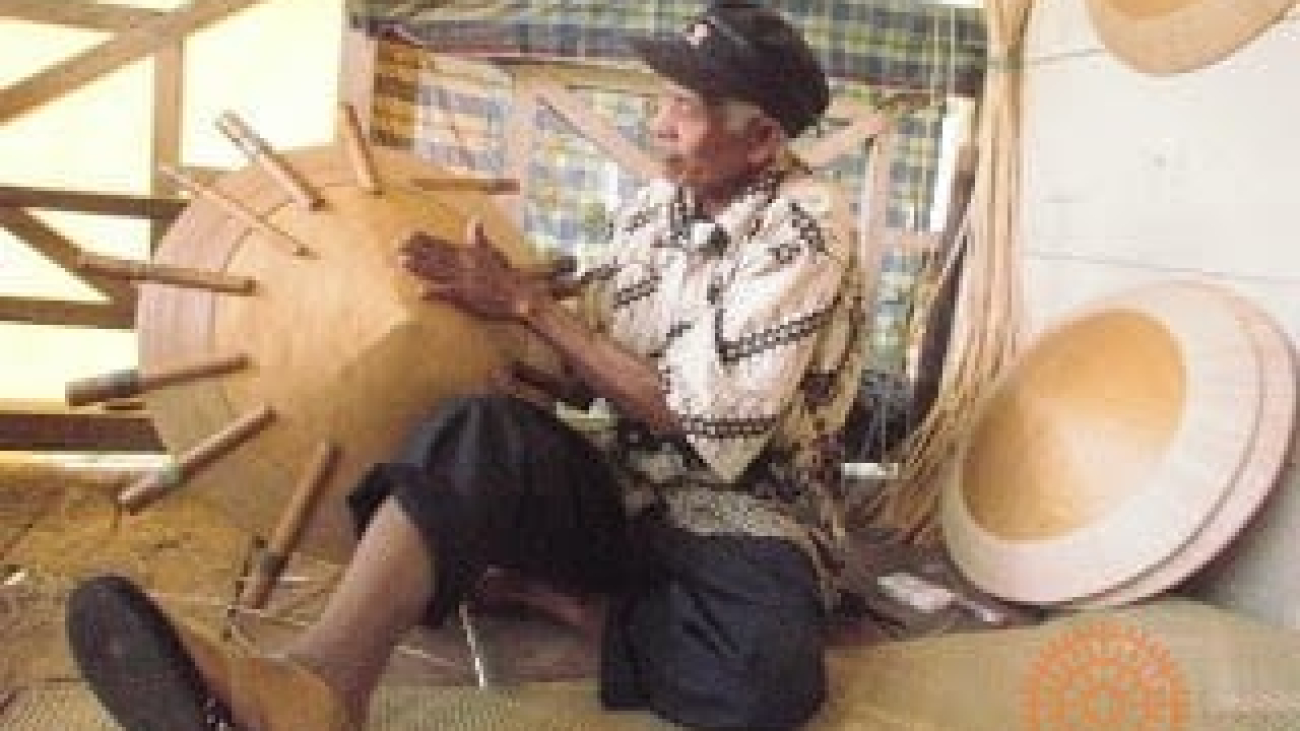
I met Grandpa Marcia at Pasar Bolu, the main market of Rantepao, which happens every six days. I was looking for a traditional bamboo hat to be worn to funeral ceremonies. As usual, when I go shopping I always look for a seller who smiles. I will pay a higher price, even without bargaining to a smiling seller. Among all the hat sellers, Grandpa Marcia’s wide smile drew me to him. From then on, I often go to his little, but clean wooden hut in the Leprosarium.

Grandpa Marcia is a Master hat maker. He has taught his daughters and neighbors how to make top quality hats.They share the work in making each hat. Grandpa Marcia does the most difficult part, which is the bamboo center top and the top cone. It takes them up to four weeks to make a hat, which includes the time to dry the bamboo strips in the sun.

Grandpa Marcia goes to Pasar Bolu every six days to bring his hats and those of his neighbors. Many of his neighbors do not dare to leave the Leprosarium, because they have lost their fingers and toes. Grandpa Marcia has also lost his right leg. However, he now wears a false leg. And once he wears long pants and shoes, he looks like any ordinary people. That’s why he does not have any problem about going to the market.

The World Leprosy Day was created and announced for the first time on 31 January 1954 by Raoul Follereau. He is a journalist and a fighter who believes, “that people affected by leprosy could be cared for like all others who are ill and so that those in good health could be cured of their absurd and often criminal fear of this disease and those who are affected by it”. 2011 is an important milestone in eradicating leprosy with the start of WHO (World Health Organization) program of “Enhanced Global Strategy for Further Reducing the Disease Burden Due to Leprosy 2011-2015”.

In Jakarta, the World Leprosy Day will be commemorated on 31 January, 2011 with three goals: to build confidence and independence for the survivors of leprosy, to eradicate stigmatization on leprosy sufferers and survivors and to empower the leprosy survivors to build their own future, their family and community. These goals are important, especially with the fact that according to the Indonesian Minister of Health in 2010, that there are still around 14 provinces and regencies in Indonesia which still have leprosy. Additionally, Indonesia together with India and Brazil are the top three countries, which still have new Leprosy sufferers.

It is clear then, that Grandpa Marcia is one of leprosy survivors who has managed to empower himself socially and economically while supporting his family and helping his community. At the same time, with his traditional hats, he maintains the continuation of Toraja culture.

You can also check on this link to read more.
adonara

Lembata, East Nusa Tenggara

On the volcanic island of Lembata, the land is as dramatic as its woven textiles. Towering mountains, black sand beaches, and fertile valleys form the backdrop of daily life, where weaving has long been central to both livelihood and identity. Each cloth is a story — dyed in natural hues, patterned with ancient symbols, and treasured for ceremonies that mark life’s most important transitions.

But beauty and tradition have not shielded Lembata’s weavers from hardship. Many women relied on weaving only as supplementary income, while farming and fishing dominated household economies. The scarcity of raw materials — cotton and natural dye plants — made weaving difficult to sustain, and younger generations began to drift away, tempted by city life and the promise of steady jobs. For years, the craft risked fading into memory, its knowledge kept alive only by older women.

TORAJAMELO entered as a bridge between heritage and opportunity. By offering design innovation workshops, ensuring weaving standards, and opening market pathways, TORAJAMELO helped weavers see their craft not just as ritual but as livelihood. Local cooperatives were strengthened, ensuring that artisans worked together for better bargaining power and visibility. Digital storytelling brought their textiles to new audiences, highlighting Lembata not just as a source of cloth, but as a guardian of heritage.

Weaving in Lembata now contributes significantly to household incomes, enabling women to invest in education, health, and community wellbeing. Younger women, once reluctant to weave, are returning to the loom, drawn by both pride and the possibility of financial independence. TORAJAMELO’s presence has transformed weaving from a quiet, undervalued practice into a celebrated profession that carries the voice of Lembata’s women to the wider world.

Sungai Utik / Telaga Kumang

Reviving the ancient pilih selam weaving technique with TORAJAMELO

Sungai Utik’s Telaga Kumang women revive the ancient pilih selam weaving technique in West Kalimantan, with Torajamelo’s support helping them gain market access, preserve culture, and empower future generations.

In the heart of West Kalimantan, the Dayak Iban community of Sungai Utik stands as a global symbol of resilience and tradition. Guardians of more than 9,400 hectares of customary forest and winners of the Equator Prize 2019 and the Gulbenkian Humanity Prize 2023, the people of Sungai Utik have long lived in harmony with their land. Alongside this ecological stewardship, the women of Telaga Kumang continue a cultural practice just as vital: the intricate pilih selam weaving technique, locally known as the “lintah” motif. This method, once at risk of fading, is now experiencing a revival.

Torajamelo, together with Solidaridad, partners closely with Telaga Kumang to strengthen their weaving practice. In discussions with 25 participants from the AMAN community, artisans explore ways to improve weaving quality, expand color palettes, and align craftsmanship with sustainable market standards. With fairer pricing and new visibility, weaving now sustains livelihoods while inspiring youth through cultural schools and enterprises.

Beyond Sungai Utik, Torajamelo’s support extends to Borneo Chic in Ensaid Panjang, where 36 weavers from the Jaya Bersama Community face challenges such as dependency on tourist sales and limited natural dyes. Through collaborative problem-solving, these artisans are discovering new approaches to strengthen their creative economy.

Meanwhile, the ASPPUK Community, represented by UMKM Maju Jaya with 33 artisans, continues to innovate despite hurdles like scarce raw materials (rattan, resam, purun, kapua bark), deforestation, fluctuating prices, and limited advertising channels. Torajamelo helps them seek sustainable alternatives and expand market access.

This initiative is more than weaving threads; it interlaces diverse stories of tradition, challenge, and renewal. As a catalyst for sustainable change, Torajamelo ensures that every textile is not only a beautiful cultural object but also a voice for resilience, women’s empowerment, and innovation.

References-
BujangAdau
jadesta.kemenpar.go.id
Suarakalbar.id
inspirasipariwisata.com
Jawa Pos
Kolase.id
Kolase.id
tirto.id
kalbar.antaranews.com
jadesta.kemenpar.go.id

Endo Segadok

Endo Segadok: Reviving Dayak Iban Weaving

Endo Segadok in West Kalimantan revitalizes traditional Dayak Iban weaving through design training, sustainable practices, and market access support from Torajamelo.

In Desa Menua Sadap, Kapuas Hulu, the Endo Segadok collective preserves Dayak Iban textile heritage—producing Kebat, Sidan, Songket, and sacred Pileh Selam weaves, guided by cultural leader Margareta Mala, a Tunas Kehati laureate. One Kebat piece even sold for Rp 13.4 million, signaling strong cross-border appeal, especially in Malaysia.

Torajamelo (with Solidaridad) enhances these traditions through skill-building workshops and design development that ensure high-quality weaving and new dye and color exploration. They guarantee fair pricing, helping weavers reinvest in raw materials, reduce dependency on middlemen, and retain cultural authenticity.

Through their brand platforms, Torajamelo transforms these traditional textiles into stylish fashion, accessories, and home décor sold via B2B, B2C, and curated tourism channels—raising visibility and market demand. GI registration support further affirms the unique identity of Endo Segadok’s motifs, helping the community claim cultural and legal recognition.

Additionally, by pioneering regenerative agricultural initiatives (like local fiber production) and encouraging decentralized supply systems, Torajamelo promotes sustainable art supply chains and empowers weaving communities toward long-term independence.

In other regions, these strategies have enabled weavers to increase incomes to Rp 2–3 million monthly, prevent migration, revive cultural pride, diversify income through tourism, and reinforce community resilience.With Torajamelo’s support, Endo Segadok is not just weaving cloth—but weaving sustainable futures, cultural dignity, and economic independence.

References-
samueletini.com
Jakarta Globe
A.I. Angels of Impact
Bcorpsea
Catalyst Now
AIM2Flourish
samueletini.com
Changemaker Library
wisestorytelling.org
travel.ourbetterworld.org
Cultural IP Rights

LDW Suloara’

Safeguarding Pa’Bunga and Pa’Borong Weaving in Sa’dan Matallo

 In Sa’dan Matallo, North Toraja, the LDW Suloara’ cooperative unites four villages to revive pa’bunga and pa’borong weaving. With Torajamelo’s support, artisans preserve tradition while gaining market access, sustainable income, and renewed pride in Toraja’s cultural heritage.

In Toraja Utara, South Sulawesi, the community cooperative LDW Suloara’ brings together weavers from four villages in Sa’dan Matallo—Pambalan, Unoni, Sangkaropi, and Andulan Bate. Each village carries a unique legacy: Unoni is renowned for pa’bunga (floral/floating motifs), while Sangkaropi and Andulan Bate specialize in pa’borong (linear and striped motifs). These designs are woven on backstrap looms using age-old techniques, forming cloths central to Toraja’s rituals, heritage, and identity.

Torajamelo has partnered closely with LDW Suloara’, helping artisans not only preserve their traditions but also adapt them for contemporary markets. Through training in product diversification, natural dye use, and fair trade standards, Torajamelo ensured that pa’bunga and pa’borong textiles could move beyond ceremonial contexts into everyday lifestyle products—such as fashion, home décor, and accessories. This widened appeal opened doors to national and international markets, giving weavers steady income and renewed pride in their craft.

The impact has been transformative: younger generations are once again drawn to weaving, families gain sustainable livelihoods, and LDW Suloara’ has emerged as a model of how cultural preservation can align with economic empowerment. By amplifying Sa’dan textiles through storytelling, exhibitions, and digital platforms, Torajamelo ensures that every woven piece carries both the artistry of Toraja and the resilience of its people.

LDW Suloara’ stands today as a living bridge—connecting Toraja’s weaving roots with the global community.


Toraja

Nestled in the highlands of South Sulawesi, Toraja is known for its misty mountains, tongkonan traditional houses, and deeply spiritual rituals. Beyond its breathtaking landscape lies a centuries-old craft that binds the community together — the weaving of pa’bunga (floral motifs) and pa’borong (striped motifs). These textiles are not just cloth; they are cultural symbols, woven into ceremonies of life and death, and treasured as part of Toraja’s living heritage.

In recent decades, however, the weaving tradition faced decline. Younger generations, drawn to modern work and education, began to move away from the loom. Limited access to markets meant that weaving, once a source of pride, struggled to sustain livelihoods. Many women weavers continued their craft in silence, but the threat of losing patterns, techniques, and knowledge grew each year.

This is where TORAJAMELO stepped in. By working with local cooperatives like LDW Suloara’, TORAJAMELO helped weavers strengthen both tradition and innovation. Training programs encouraged product diversification and the revival of natural dye practices, while partnerships opened access to fair trade and global markets. Pa’bunga and pa’borong weavings, once confined to ritual use, now find new life as fashion, home décor, and lifestyle products — all while honoring their cultural roots.

The impact has been transformative. Women now gain sustainable income, youth are returning to learn the loom, and Toraja’s weaving heritage stands strong in the global stage. TORAJAMELO’s support has helped Toraja not just preserve its identity but also reimagine it for a brighter future.

Every woven cloth from Toraja carries more than threads — it carries the story of resilience, faith, and cultural pride.

Mamasa

Tucked away in the green valleys of West Sulawesi, Mamasa is often described as Toraja’s “sister region,” sharing similar landscapes of terraced hills, winding rivers, and traditional wooden houses. Weaving in Mamasa carries its own identity, blending patterns that echo nature and the community’s rituals. For generations, textiles were woven not just as daily cloth, but as living records of cultural memory.

Yet, Mamasa’s weavers faced many challenges. Limited access to resources and markets left many artisans dependent on irregular sales to tourists. Younger women, in search of more stable jobs, began to abandon weaving, leaving elders with the difficult task of carrying on the craft alone. Without support, both livelihoods and cultural knowledge risked fading away.

Torajamelo’s involvement brought renewed energy to Mamasa’s weaving traditions. By introducing design workshops, opening networks to urban and global markets, and encouraging sustainable dyeing techniques, Torajamelo helped artisans rediscover weaving as a viable profession. Through collective storytelling and community organizing, Mamasa’s women were able to reposition themselves not just as keepers of heritage, but as creative entrepreneurs.

Today, Mamasa’s woven cloths travel beyond the valleys, telling the world stories of resilience and artistry. The support has restored dignity, economic stability, and cultural pride — ensuring that Mamasa’s weaving tradition continues to be handed down from loom to loom, generation after generation.

Every Mamasa textile is more than fabric; it is a bridge between history and hope.

Manggarai, Flores

The Manggarai region of Flores is known for its breathtaking landscapes — terraced rice fields, misty mountains, and coastal stretches that open to the Flores Sea. Amid this beauty lies a cultural richness as diverse as the land itself, with dozens of villages each holding their own weaving traditions. For Manggarai’s women, weaving is not just craftwork — it is identity, a communal practice that ties families to their ancestors.

Despite its vibrancy, Manggarai’s weaving communities have long faced significant challenges. Many groups were isolated, working individually without collective organization. Dependence on small-scale markets and middlemen often meant low prices for textiles that took weeks or months to produce. Added to this were the rising costs of raw materials and the lack of recognition for women’s labor, which kept many households in cycles of economic vulnerability.

TORAJAMELO’s role in Manggarai has been to weave these threads of diversity into collective strength. By connecting scattered weaving groups, the organization fostered collaboration and knowledge-sharing, ensuring that artisans no longer worked in isolation. Training programs emphasized not only design and product quality but also storytelling — allowing Manggarai weavers to communicate the cultural depth behind each textile. Market access was expanded, linking Manggarai’s ikat to audiences in urban Indonesia and abroad.

The results ripple through the community. Weavers now command better prices, securing fair value for their intricate labor. Collective groups have gained visibility, strengthening women’s voices in both cultural and economic spaces. For many, weaving has become more than tradition; it is now a respected livelihood that sustains families, educates children, and revitalizes local pride.

Manggarai stands today as an example of how cultural heritage, when nurtured and connected, can create both unity and opportunity. With TORAJAMELO’s support, Manggarai’s women have proven that weaving can be both a celebration of diversity and a foundation for sustainable futures.

Adonara, East Nusa Tenggara

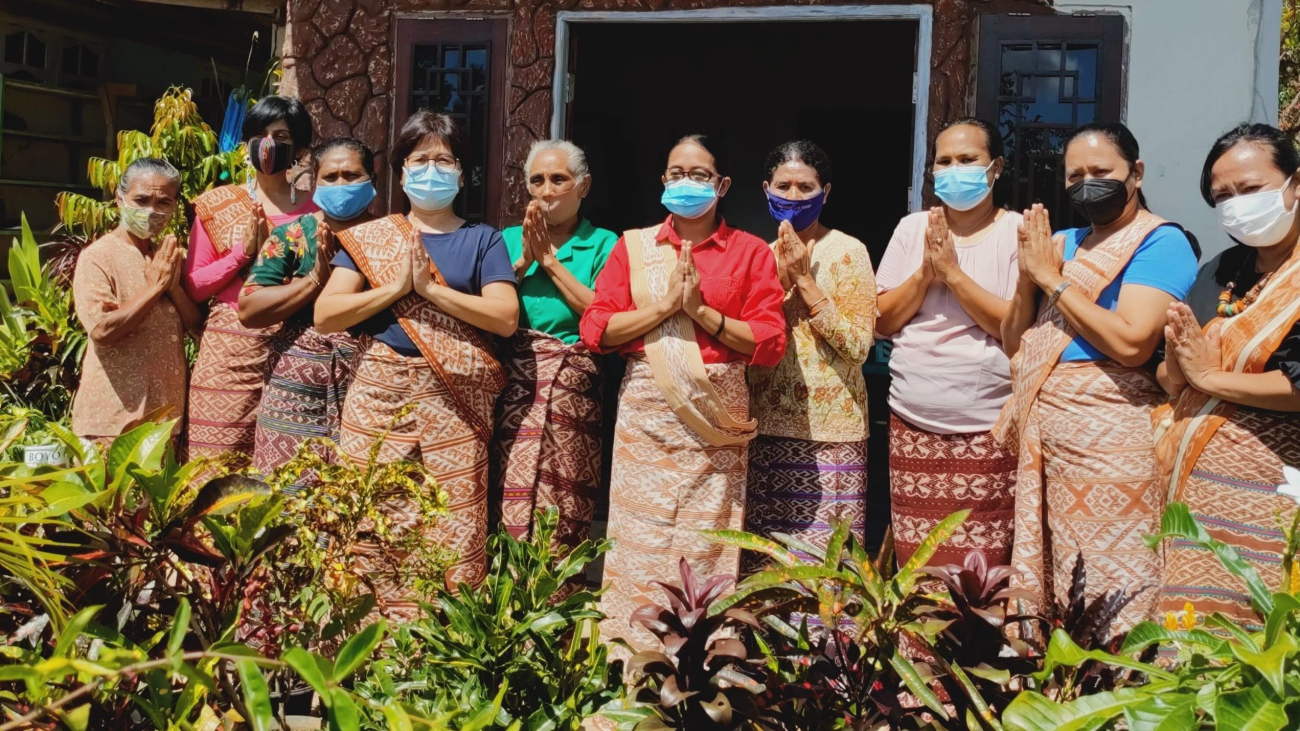
On the island of Adonara, where mountains meet the sea, weaving has long been part of daily coastal life. Women balance household work, farming, and fishing with the artistry of the loom, creating ikat rich in symbolic motifs.

But despite its beauty, weaving in Adonara struggled. With limited access to fair markets and dependence on tourist sales, many artisans could not rely on weaving as a stable source of income.

Torajamelo’s support helped change this. By introducing product diversification, new design perspectives, and pathways to reach global buyers, the women of Adonara began to see weaving as a form of empowerment rather than a burden. Their textiles now carry not only traditional motifs but also the promise of economic resilience.

Adonara’s women stand today as proof that when women are enabled, entire communities thrive.

oesena

Oesena, West Timor

Nestled in West Timor, Oesena is famous for its mastery of natural dyes — deep reds, earthy browns, and striking blacks that color its handwoven ikat. These hues carry stories of ancestry, spirituality, and identity.

Yet, Oesena’s weavers struggled with shortages of cotton and natural dye plants. Reliance on small local markets made weaving financially unstable, pushing many women to question its future.

Torajamelo worked with Oesena’s artisans to revive dyeing traditions while improving weaving quality and market access. By supporting sustainable sourcing of dye plants and connecting the community to broader audiences, weaving regained its value as both an art form and a livelihood.

Now, Oesena’s textiles not only preserve ancient color traditions but also bring income and recognition to the women behind the loom.