Manggarai, Flores

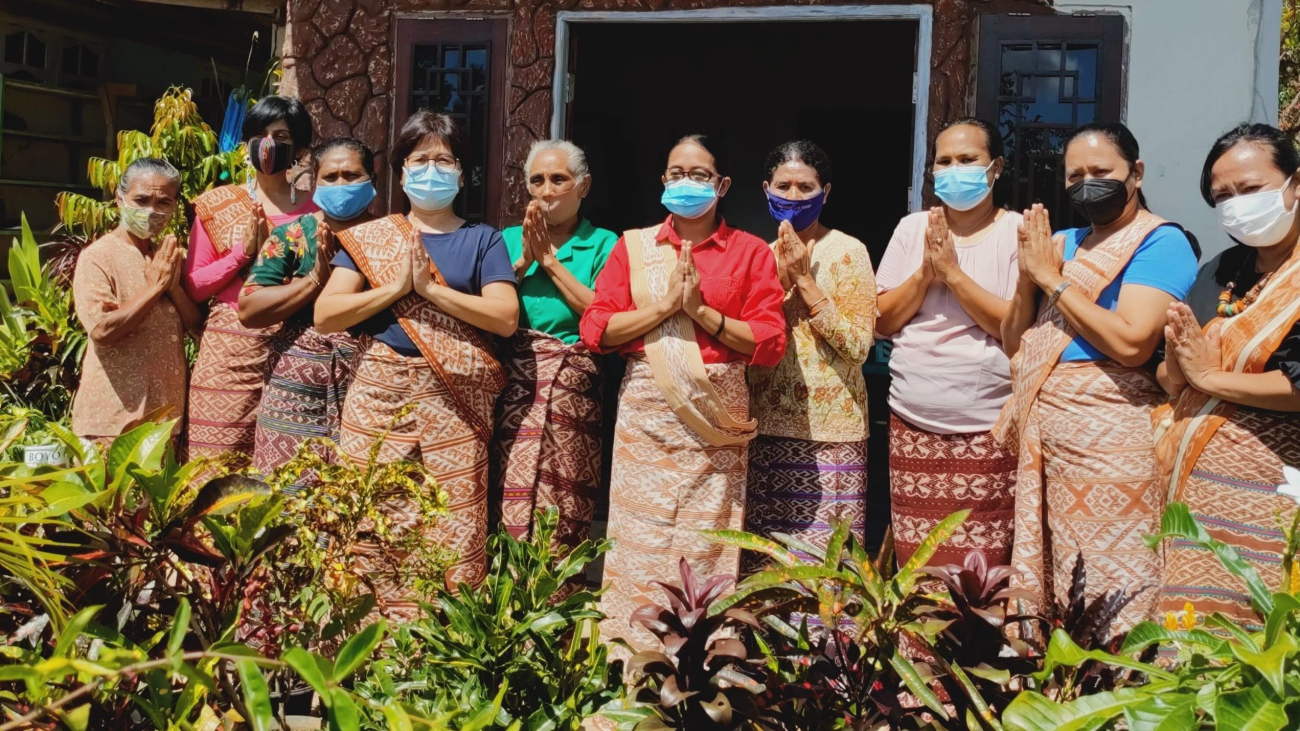
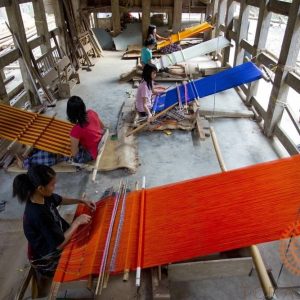
The Manggarai region of Flores is known for its breathtaking landscapes — terraced rice fields, misty mountains, and coastal stretches that open to the Flores Sea. Amid this beauty lies a cultural richness as diverse as the land itself, with dozens of villages each holding their own weaving traditions. For Manggarai’s women, weaving is not just craftwork — it is identity, a communal practice that ties families to their ancestors.

Despite its vibrancy, Manggarai’s weaving communities have long faced significant challenges. Many groups were isolated, working individually without collective organization. Dependence on small-scale markets and middlemen often meant low prices for textiles that took weeks or months to produce. Added to this were the rising costs of raw materials and the lack of recognition for women’s labor, which kept many households in cycles of economic vulnerability.

TORAJAMELO’s role in Manggarai has been to weave these threads of diversity into collective strength. By connecting scattered weaving groups, the organization fostered collaboration and knowledge-sharing, ensuring that artisans no longer worked in isolation. Training programs emphasized not only design and product quality but also storytelling — allowing Manggarai weavers to communicate the cultural depth behind each textile. Market access was expanded, linking Manggarai’s ikat to audiences in urban Indonesia and abroad.

The results ripple through the community. Weavers now command better prices, securing fair value for their intricate labor. Collective groups have gained visibility, strengthening women’s voices in both cultural and economic spaces. For many, weaving has become more than tradition; it is now a respected livelihood that sustains families, educates children, and revitalizes local pride.

Manggarai stands today as an example of how cultural heritage, when nurtured and connected, can create both unity and opportunity. With TORAJAMELO’s support, Manggarai’s women have proven that weaving can be both a celebration of diversity and a foundation for sustainable futures.

Adonara, East Nusa Tenggara

On the island of Adonara, where mountains meet the sea, weaving has long been part of daily coastal life. Women balance household work, farming, and fishing with the artistry of the loom, creating ikat rich in symbolic motifs.

But despite its beauty, weaving in Adonara struggled. With limited access to fair markets and dependence on tourist sales, many artisans could not rely on weaving as a stable source of income.

Torajamelo’s support helped change this. By introducing product diversification, new design perspectives, and pathways to reach global buyers, the women of Adonara began to see weaving as a form of empowerment rather than a burden. Their textiles now carry not only traditional motifs but also the promise of economic resilience.

Adonara’s women stand today as proof that when women are enabled, entire communities thrive.

oesena

Oesena, West Timor

Nestled in West Timor, Oesena is famous for its mastery of natural dyes — deep reds, earthy browns, and striking blacks that color its handwoven ikat. These hues carry stories of ancestry, spirituality, and identity.

Yet, Oesena’s weavers struggled with shortages of cotton and natural dye plants. Reliance on small local markets made weaving financially unstable, pushing many women to question its future.

Torajamelo worked with Oesena’s artisans to revive dyeing traditions while improving weaving quality and market access. By supporting sustainable sourcing of dye plants and connecting the community to broader audiences, weaving regained its value as both an art form and a livelihood.

Now, Oesena’s textiles not only preserve ancient color traditions but also bring income and recognition to the women behind the loom.

Maubesi, West Timor

High in the hills of West Timor lies Maubesi, a community where every woven textile tells a story of survival, memory, and identity. Known for its intricate ikat patterns, Maubesi’s weaving tradition has always been central to daily life and ceremonies, but poverty and isolation threatened its continuity.

Weavers here faced severe challenges: raw material shortages, lack of recognition for their work, and little access to markets. Younger generations, uncertain of weaving’s future, began leaving the craft behind.

Torajamelo stepped in to ensure Maubesi’s weavers were not left behind. By providing design training, linking artisans with fair markets, and celebrating their stories on digital platforms, Torajamelo helped the women of Maubesi reimagine their craft as both heritage and livelihood.

Today, Maubesi textiles are appreciated not just as cloths but as cultural treasures that support families and empower women.

image1-1-1024x768-1

#Soulfultravel

To make life better for the weavers & village people. To preserve & rejuvenate Indonesian art & culture, especially tenun gedog or hand-woven textile

Toraja

  • Stay with the Weavers by Sa’dan river, learn to weave, lunch cooked by the Weavers. Or stay at a 3-star hotel in Rantepao.
  • Stay with Suloara’ Village people, guided tour to Bamboo forest, snack & lunch cooked by the Village people.
  • Or stay in Banua Sarira (Dinny’s house in Batutumonga)
  • Toraja Cultural Night with traditional dance & music
  • Plus:
    • Sight-seeing tours, including a visit to the local market
    • White-water rafting
    • Attend ceremony, if available

Mamasa

  • Stay in the Weavers’ houses in Balla hills, learn to weave, meals cooked by the weavers.
  • Or stay at a 3 star hotel in town
  • Hiking to a nearby waterfall
  • Enjoy natural hot spring bath
  • Mamasa Cultural performance with local dance and music
  • Plus:
    • sight-seeing to traditional villages & local market
    • Attend a ceremony, if available

Adonara

  • Fly to Larantuka, then take a small boat across Flores Strait
  • Stay at PEKKA Guest House in Lodan Doe
  • Learn to weave and enjoy organic food, including the famous sorghum and corn, served by PEKKA women
  • Plus:
    • Sight-seeing to traditional villages & sandy beaches

Visit local markets for penetoten-float warp hand-woven textile

Lembata

  • Fly to Kupang, then take a small plane to Lewoleba airport
  • Stay at PEKKA Guest House in Kerubaki beach
  • Learn to weave and enjoy organic food, including fresh seaweed salad, served by PEKKA women
  • Plus:
    • Sight-seeing to traditional villages, smoking volcano & sandy beaches
    • Visit local markets for the famous natural dye & hand-spun cotton ikat hand-woven textile

Soe, West Timor

Perched in the rugged highlands of West Timor, Soe is a land of contrasts — rolling hills and valleys marked by long dry seasons. Life here has always been a test of resilience, with communities relying on agriculture and weaving to sustain themselves. The ikat cloths of Soe are renowned for their bold geometric motifs and deep natural dyes, embodying centuries of Timorese tradition and spiritual meaning.

But resilience has its limits. The harsh climate makes farming unreliable, leaving women’s weaving as one of the few stable livelihoods. Yet even this art faced challenges: limited raw materials, dwindling younger weavers, and very little access to markets outside the region. For many women, weaving was undervalued, treated as household labor rather than skilled artistry.

Torajamelo helped shift this narrative. By connecting Soe’s weavers to broader audiences, training them in design innovation, and supporting sustainable dye practices, the organization helped women reclaim weaving as both cultural heritage and economic opportunity. What was once seen as survival work became a source of empowerment, dignity, and recognition.

Today, Soe’s textiles are not just sold locally but reach markets across Indonesia and beyond. Families benefit from more consistent incomes, and weaving groups have become stronger in preserving their traditions while adapting to modern demands. With Torajamelo’s support, Soe has proven that even in dry lands, threads of hope can flourish.

Each ikat from Soe is more than cloth — it is resilience, identity, and empowerment woven into fabric.

torajamelo_spotlight_a_0

An assessment of the impact of TORAJAMELO

At the heart of South Sulawesi’s highlands, TORAJAMELO has been transforming lives while preserving heritage since 2008. What began as a mission to revive the nearly forgotten art of Toraja Tenun weaving has grown into a powerful movement for sustainable fashion, women’s empowerment, and cultural pride.

Through training, exhibitions, and the creation of the Sa’dan Siangkaran cooperative, TORAJAMELO helped hundreds of local women rediscover the value of weaving. Once at risk of fading away, traditional motifs such as pa’bunga bunga, ma’tapa’, and kala’apa now thrive again, celebrated both in ceremonies and contemporary fashion.

Today, over 300 women weavers earn steady incomes from IDR 1–5 million per month, weaving at home while balancing family responsibilities. Many women who once migrated for work have returned, finding dignity and opportunity in their heritage craft. Beyond income, the movement has sparked a revival of local identity, with government officials and communities proudly wearing Toraja Tenun in everyday life.

While challenges remain—such as machine-made imitations and cooperative sustainability—TORAJAMELO continues to innovate, exploring community-based tourism, global ethical markets, and digital storytelling. More than weaving, it is about reconnecting people, culture, and purpose—stitch by stitch.

You can also check on this link to read more.

12771771_951526981551404_8161120667704967497_o-1

TORAJAMELO, How Torajan Handwoven Textile Could Pull Out Women and Society from Cycle of Poverty

Every time the discussion about developing countries emerges, there’s always a recurring theme of exploitation of indigenous people. Not only in developing countries, sometimes even in powerful and leading countries, these indigenous communities still suffer from a potential threat to their cultures and livelihoods.

Traveling to the rural areas of Sulawesi, one of Indonesia’s archipelagos, we will be welcomed by centuries worth of tradition, preserved by thecommunity in Toraja.

Courtesy of Torajamelo.com

Dinny Jusuf, was moved by the fact that the poverty rate in the population of 254 million people in Indonesia is an astounding 13.8%, with 70% among them are women (BPS, 2015).

She sees that across Indonesia, many women’s only skill is back-strap weaving, but their creativity is limited by prices and low demands, and not to mention the culture appropriation by big fashion names that discredit the works of these artisans. It forces these women to find works in other countries, only to be abused by their employers, and some even came back with unwanted pregnancy. So she came up with TORAJAMELO.

TORAJAMELO (CBN – ID000009955), literally means Beautiful Toraja, was then set up to create a better life for the marginalized rural women weaver artisans in Indonesia and to rejuvenate the art and culture of Indonesian hand-woven cloth. She started the work in Toraja, South Sulawesi, Indonesia in 2008. What the company has done so far is preparing the weavers for the global market by conducting Community Organizing programs and Capacity Building (i.e. fashion trend, textile design, etc.) and giving access to micro-finance and social support (i.e.reading glasses donation, etc.). Not only that, the company also has a regeneration program to pass on weaving knowledge to the young people.

OLYMPUS DIGITAL CAMERA
Courtesy of Torajamelo.com

Through their products, TORAJAMELO creates fun & functional head-to-toe fashion lines and gift products of high quality, all made of Indonesian hand-woven textile from their indigenous geographical origin.

“By 2025, we aim to become the shopping destination of Indonesia, which sells high-quality fashion line and gift products, all made of Indonesian hand-woven textile from their geographical origin, in collaboration with at least 5,000 weavers across rural Indonesia and at least 100 urban poor women who produce the finished items,” explains Dinny.

Courtesy of Torajamelo.com

Basing the business on community, quality and compassion, TORAJAMELO seeks to make a real change by respecting artisans and value them with the fair market prices for the weavers’ better lives. The company works as both foundation and a limited liability. With a total of 1,000 weavers based in Sulawesi and East Flores, TORAJAMELO now ventures their business to e-commerce and brick and mortar shop in expatriate area of South Jakarta.

      
Courtesy of Torajamelo.com      Courtesy of Torajamelo.com

Dinny’s background as a former Secretary General of Komnas Perempuan (National Commission on Anti Violence Against Women) surely plays part in her continuous advocacy for indigenous women weavers. Now as the CEO, she works alongside Nina Jusuf as the Head of Design and Production with fashion design degree and her expertise in violence against women issues.

“We keep our team small, so we can be agile. We believe in mentoring the young generations. So, all of our seven staffs consist of women who share the dream to create a better life for rural women through weaving,”

Courtesy of Torajamelo.com

In November 2016, TORAJAMELO was chosen by the Staff Office of the President of Republic of Indonesia as one of the home-grown brands to develop Nation Branding for the promotion of Trade, Investment and Tourism for Indonesia.

Courtesy of Torajamelo.com

In May 2016, Dinny Jusuf received “The Marketeers Women Award 2016” by the MarkPlus Inc, a leading company in Southeast Asia on Marketing Strategy, and these awards are just a few of many other inspiring awards that this trailblazer company has won.

TM 4 (1) 1

Catalyst For Change

“Don’t ever give up your dream for anything or for anybody, no matter what.”

— DINNY JUSUF


Dinny Jusuf

BY JESSICA SMULDERS COHEN

When I first met Dinny in my parents’ living room in Jakarta, just around the corner from TORAJAMELO’s shop in Kemang, her open face and smiling eyes were instantly likable. She introduced herself according to her business card: mother, wife, and dreamer. Her two adult children (one a wise man, the other a wild spirit, according to her) and her Torajanese husband are the pillars of her existence. As for dreamer, she admits that people often think she is crazy, because she always does what she feels like and believes in. Once I was back in wintery London, I very much enjoyed following up on those early conversations via Skype calls to Toraja a couple of months later.

TORAJAMELO (beautiful Toraja) was created in response to a cause, rather than as a planned social enterprise, Dinny says. “We didn’t even know what a social enterprise was, and suddenly we were being branded as one.”

She sees the endeavor as simply giving women back their rights — the right to be at home with their children; the right to earn a living to support their family, free from abuse; the right to creativity. The chosen tool for this in Toraja — especially as the lower castes of women in her husband’s village are weavers — is weaving. Dinny also admits she has a soft spot for the craft, and feels it needs more publicity and recognition compared to the already famous Indonesian batik.

Such a philanthropic but pragmatic enterprise did not materialize out of thin air. Dinny brings with her an impressive professional track record: first as a successful banker, then as the mother of two, then as Secretary General of the Indonesian National Commission on Anti-Violence Against Women, when she also cofounded Suara Ibu Peduli (The Voice of Concerned Mothers). In fact, she says she settled in Toraja to finally take a break. Despite that desire for a rest, however, it was not long after she met the local weavers — in 2008 while her husband was building them a house — that TORAJAMELO was born.

Dinny felt a sense of urgency to do something, because she saw elder women dying, and their craft with them, while the younger women were absent working overseas as nannies in Singapore and Malaysia. All of this was highlighted by the fact that many of the babies in the village had Chinese-looking faces. (This tugged on her heartstrings; Dinny has firsthand experience of the stigma that comes along with growing up in Indonesia with Chinese heritage.) The fathers were as absent as the mothers — most likely raising their legitimate children with their wives on the Malay Peninsula, she says. Pregnant Torajanese women would be forced to go home to give birth after being either seduced or abused by their bosses, and would then return to work, leaving their children to be raised by their grandparents in the village.

The Torajanese villagers are predominantly poor farmers, and even though they once had a strong weaving tradition, they no longer had much of a market for it. The number of overseas tourists who visit for the local culture (including textiles, ceremonies, and nature, especially hiking) dropped precipitously after the terrorist attacks in Bali. So Dinny decided to buy up all the cloth they were making and sell it in Jakarta. A couple of years later she appointed her sister Nina (who is also a women’s rights activist but has a training in fashion) as the head designer, and went on to design the garments we see today.

It was this sister dream team who went on to change the lives of not only Torajanese weavers, but countless other women across the archipelago. Dinny has a deep-seated love of Indonesia, Indonesian culture, and especially Indonesia’s traditionally woven cloth. She feels this comes from her mother, who — while pregnant with her, and despite being ethnically Chinese — was completely in love with both Dinny’s Javanese father and the land from whence he came. Notwithstanding this love, her mother eventually immigrated to the United States when the discrimination against her and her children’s ethnicity became too much, bringing five of her six children one by one to join her. Dinny was the only one who decided to remain behind, despite also facing the same prejudices as a Chinese-looking woman in Indonesia that her mother had wanted to escape. She eventually coaxed Nina back for six months a year to help with the operation of TORAJAMELO, which is run from their clothing enterprise in Bandung.

Despite this support from her sister, as well as that of her other siblings and her own family, things have been far from easy. The first battle in Toraja was overcoming the resistance she faced from her husband’s family, and even her husband himself. Being of a higher caste, they were not supportive of her work with the lowly weavers. Finally, the wary prediction of a local wise man also came true: Dinny was deceived by a local weaver who tried to steal her business by faking TORAJAMELO weaver signatures to sell her own proposal for government funding. In this case she was surprised that it was her husband and his family came to her aid, supporting her efforts to resolve the issue. Her latest challenge came when funding was dropped mere weeks from the opening of a momentous exhibition at the textile museum of Jakarta. That time it was her ex-colleagues from Citibank who came to her rescue (personally, not on behalf of the bank). The weavers themselves also pitched in, insisting that a group big enough to do a ceremonial dance had to travel to Jakarta all the way from East Flores to participate, instead of the four representatives that TORAJAMELO could fund. In both cases she found solace in family and friends, and was deeply moved by the purely emotional response to difficulty.

As with the current trend in social entrepreneurship, Dinny has a hard time responding to ideas of modern feminism and global sustainability. She simply does what she feels and knows is right for the weavers and their traditions, instead of looking to name or brand it. For her the greatest impact is seeing Torajanese women return to weave and be with their families. The sustainability aspect comes from women supporting women across generations, and the preservation of cultural identity. When the women are overseas they do not weave — it belongs to the context of their Torajanese house and village, with the support of family and community. “They become whole again,” when they return, explains Dinny. “TORAJAMELO acts as a catalyst for returning their dignity.”

This is both her biggest challenge and most satisfying reward. It was not easy convincing the weavers that they could make better lives for themselves. In many ways they were content to accept their fate. However, now that they see the results of Dinny’s efforts, they are extremely pleased with the improvement.

One of the women who has inspired Dinny the most, a woman she looks up to as a mentor and friend, is a socialist who spent time in jail for her efforts. When Dinny visited her and talked of the strife she faced, her friend would always say, “You may rest, but you cannot ever give up.” This is evident in her work: She has helped more than 48,000 market women set up cooperatives, which are still going strong despite economic difficulties. She lives by the motto that everybody can give a helping hand. “You don’t have to be rich to help others,” she says. “If you have a roof over your head, clothes on your back, and eat three meals a day, you are ready.”

Another favorite piece of advice came from the aforementioned Torajanese wise man: “Dinny, just do it — I give you my blessing. You will be betrayed by your own kind, but don’t give up. I will pray for you. Just keep going.” She laughed at first when he said this, but when his prophecy came true she was shocked at his accuracy!

Young Weavers

Dinny continues to endeavor to keep doing what she believes in, no matter who laughs at her — as her friends often do. Given that people around her, even those in high places, have expressed their envy of her freedom, she has made her own mantra: “Don’t ever give up your dream for anything or for anybody, no matter what.”

“What will you do next?” I ask her. Now that she has reached the 10-year milestone with TORAJAMELO, Dinny has started thinking, especially now that Nina has to spend more time in the United States to do her work. She says she wants to mentor young professional women, whom she believes she can help and inspire, given her breadth of experience as a banker, activist, and women’s rights advocate. She is therefore planning to take TORAJAMELO in the direction of “Thought Leadership”, with the aim of using the original vision to lift marginalized women out of poverty by sharing, inspiring and replicating the work Dinny has done with the weavers. It’s time to pass on the baton. And maybe, finally, get the rest she most certainly deserves.

Dinny Jusuf is the mother-wife-dreamer founder and CEO of TORAJAMELO, and is in charge of Public Relations, Finance and Marketing. Formally established in 2010, TORAJAMELO means “beautiful Toraja”, and is an endeavour to rejuvenate the traditional back-strap loom weaving traditions of Toraja, Sulawesi, Indonesia. Dinny previously worked with Citibank, where she turned around The Training Division from a cost center to a profit making one. Dinny is a women’s activist and was The Secretary General of the Indonesian National Commission on Anti Violence Against Women, and co-founder of women organizations such as Suara Ibu Peduli (The Voice of Concerned Mothers). Follow Instagram @torajamelo and Facebook @torajamelo.

dinny-jusuf-1-resized

Dinny Jusuf, CEO and Founder of TORAJAMELO

An inspiring story of social entrepreneurship.  Whilst many of the leaders we feature focus on the increasing urban issues, it is worth remembering that in ASEAN alone there are more than a quarter of a billion people still living in rural areas.  It is great to see what Dinny Jusuf is doing…

What’s your story?

I am a mother, a wife and a dreamer.  I have two adult children and my husband hails from Toraja, South Sulawesi, Indonesia.  I dream of a better life for marginalized people, especially the women weavers of Indonesia.  In 2008, I started working with weavers from Toraja.  In partnership with Nina, my fashion designer sister, we aim to rejuvenate the indigenous culture by taking hand-woven textile to daily contemporary life.

Our brand is TORAJAMELO, which means Beautiful Toraja. We produce head-to-toe fashion line made of hand-woven textile.  We work with around 250 weavers in Toraja and will soon expand to West Sulawesi and East Flores.

What excites you most about your industry?

Young People!

We love it when we see young girls learn weaving again in the villages.  They say, they do it, because it is a meditative activity and it pays their school fee.

We love it when young people come to our office/shop saying: “I have studied in Art History. I want to learn about Indonesian crafts, especially weaving. Can I join you?”

We love it when we see young people buy our products.  Sometimes with tears in their eyes, saying:” We have been looking for something ethnic to wear, but modern in style. This is it! Thank you!”

What’s your connection to Asia?

I was born in Bandung, West Java, Indonesia. I spent sometime in Australia.  I came back to Jakarta and in between enjoying my time as a mother and a wife, I have worked as a Corporate and Consumer Banker, Training Consultant, Social Worker, and as an Activist for Women’s Rights. I commute between peaceful Toraja and hectic Jakarta.  Toraja is where my husband was born and where our main home is.  Now as a Social Entrepreneur, I go to Jakarta to market our products.
Favourite city in Asia for business and why?

Jakarta! Actually I have a love and hate relationship with Jakarta.  I hate the traffic jam and pollution, but I love its vibrant ambiance.  So much is happening.  Presently, I am so excited with a kind of renaissance in loving Indonesian heritage creations among the Jakarta people, especially the young generation.

What’s the best piece of advice you ever received?

In 2008 when I saw nobody was buying and wearing Toraja textile, I wondered what I could do.  So, I bought a few pieces of and brought the textile to Jakarta.  I asked my friend Obin of Bin House, who is a famous batik maker, what I should do.  She said: ”Use the textile to create something”.  I have never looked back since.  Every year, we launch a new fashion line, which has 5 F’s components: fun-fashionable-functional-at fixed price-made of fiber.

Who inspires you?

Brave, hardworking, selfless and yet ordinary women! Women like the weavers in Toraja, who work in the field in the day-time and weave at night to pay for the children’s school fee. Women like the single parent weavers in East Flores, who defy their customary law to lead their life and feed their children. Urban poor women like our seamstresses, who travel a long way through traffic and rain to sew our dresses.

What have you just learnt recently that blew you away?

We learn new things every day in doing the community organizing activities among the weavers (leadership training, textile design, etc.) and doing the business in the market.  The value chains in both areas are very long.  So many things can go wrong every day. We learn to have faith, that despite all challenges, in time everything is going to be OKAY.

If you had your time again, what would you do differently?

Maybe to collect capital first from various parties (i.e. friends, family, etc.) then start working.  We have been using our saving to start and develop this business. We did not know, that it would cost so much. Hua ha! It’s too late to stop now.

How do you unwind?

Go home to Toraja with my husband and watch the clouds go by.

Have a drink with my sister Nina.

Read a book.

Spend a scuba diving holiday with my children.

Favourite Asian destination for relaxation? Why?

Toraja, South Sulawesi, Indonesia.

Because there are mountains to hike, colorful ceremonies, friendly people to chat with, great local food and where my home is.

Everyone in business should read this book:

I always have these books by my bed.

“The Power of Unreasonable People-How Social Entrepreneurs Create Markets That Change The World” by John Elkington & Pamela Hartigan

“The Sufi Book of Life-99 Pathways of the Heart for the Modern Dervish” by Neil Douglas-Klotz

Shameless plug for your business:

TORAJAMELO’s two pronged approach is community organizing, which includes providing access to education and micro finance for the weavers. This is combined with a social business in designing, producing and marketing high quality fashion line.

Dinny is the CEO in charge of Finance, Marketing and Public Relations;

while Nina is the COO in charge of Design, Production and Operations.

Dinny received the “Indonesian Women of Change” Award for The Trade and Investment category from the U.S. Ambassador to Indonesia on International Women’s Day in 2013.

In 2013, TORAJAMELO received Best Creation Award from Bank Negara Indonesia for Nina’s design.  In 2014 TORAJAMELO was recognized as one of “50 Leading Companies for Women in APEC”.

How can people connect with you?

dinny@TorajaMelo.com

www.TorajaMelo.com

Facebook/Youtube: Toraja Melo

Twitter: @TorajaMelo

phone:+628118881556